
India's services PMI marginally dipped to 58.4 in November while employment in the segment recorded robust growth, a monthly survey said on Wednesday. The seasonally adjusted HSBC India Services Business Activity Index was down marginally to 58.4 from 58.5 in October as sales increased at a softer pace. Last month, the country's services PMI recovered from its 10-month low.

India's manufacturing sector growth fell to an eight-month low in September amid softer increase in factory production, sales and new export orders, a monthly survey said on Tuesday. The seasonally adjusted HSBC India Manufacturing Purchasing Managers' Index (PMI) fell from 57.5 in August to 56.5 in September, registering the weakest pace of growth since January.

India's services sector activity eased slightly in March, weighed down by a marginal slowdown in sales amid softer demand conditions and easing inflationary pressures, a monthly survey said on Friday. The seasonally adjusted HSBC India Services PMI Business Activity Index fell from February's reading of 59.0 to 58.5 in March, but remained above its long-run average of 54.2.

India's services sector activity expanded at the slowest pace in over two years in January amid softer increases in sales and output, a monthly survey said on Wednesday. The seasonally adjusted HSBC India Services PMI Business Activity Index fell from 59.3 in December to 56.5 in January -- its lowest level since November. In the Purchasing Managers' Index (PMI) parlance, a print above 50 means expansion, while a score below 50 denotes contraction.

India's manufacturing sector growth moderated in August as output and sales rose at slowest rates since January, while competitive pressures and inflation concerns hampered business confidence, a monthly survey said on Monday. The seasonally adjusted HSBC India Manufacturing Purchasing Managers' Index (PMI) stood at 57.5 in August, below July's reading of 58.1 but above its long-run average of 54.0, signalling a substantial improvement in operating conditions.

India's manufacturing sector activity moderated in April, but still recorded the second fastest improvement in operating conditions in three-and-a-half years supported by buoyant demand, a monthly survey said on Thursday.

From the Sensex pack, Adani Ports, Tata Steel, Power Grid, Mahindra & Mahindra, NTPC, Tech Mahindra, Tata Motors, ITC, Nestle India, HCL Technologies, Bharti Airtel, State Bank of India, Asian Paints and Kotak Mahindra Bank were the gainers. Bajaj Finance, IndusInd Bank, HDFC Bank, and Zomato were the laggards.

India's services sector activity fell to a 10-month low in September as new businesses, international sales and output growth moderated, a monthly survey said on Friday. The seasonally adjusted HSBC India Services Business Activity Index fell from 60.9 in August to 57.7 in September, indicating that though the output registered an increase, the pace of growth was the slowest since November 2023. In the Purchasing Managers' Index (PMI) parlance, a print above 50 means expansion, while a score below 50 denotes contraction.

India's manufacturing sector growth eased slightly in July, on softer increases in new orders and output, while cost pressures and demand strength led to the steepest increase in selling prices since October 2013, a monthly survey said on Thursday. The seasonally adjusted HSBC India Manufacturing Purchasing Managers' Index (PMI) moderated slightly from 58.3 in June to 58.1 in July.

India's services sector activity witnessed a sharp uptick in February boosted by improving domestic and international demand, which resulted in a quicker expansion in output and a substantial increase in employment, a monthly survey said on Wednesday. The seasonally adjusted HSBC India Services PMI Business Activity Index rose from January's 26-month low of 56.5 to 59.0 in February, indicating a sharp rate of expansion.
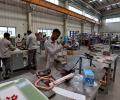
India's manufacturing sector growth fell to a joint 11-month low of 56.5 in November, restricted by competitive conditions and inflationary pressures amid a softer increase in factory orders, a monthly survey said on Monday. The seasonally adjusted HSBC India Manufacturing Purchasing Managers' Index (PMI) fell from 57.5 in October to 56.5 in November, signalling a softer improvement in the health of the sector. However, the pace of growth remained above its long-run average.

India's services sector growth recorded another month of robust expansion in July, albeit at a slightly slower pace than in June, largely supported by robust demand conditions and investment in technology, a monthly survey said on Monday. The seasonally adjusted HSBC India Services Business Activity Index was at 60.3 in July, down only fractionally from 60.5 in June. In the Purchasing Managers' Index (PMI) parlance, a print above 50 means expansion, while a score below 50 denotes contraction.
India's services PMI recovered from its ten-month low in September to reach 58.5 in October supported by strong expansions in output and new business, which in turn boosted job creation, a monthly survey said on Wednesday. The seasonally adjusted HSBC India Services Business Activity Index increased from 57.7 in September to 58.5 in October, as robust sales pipelines and strong demand conditions supported the upturn in business activity. In the Purchasing Managers' Index (PMI) parlance, a print above 50 means expansion, while a score below 50 denotes contraction.

India's services sector growth quickened in June from May's five-month low, amid a stronger rise in new orders and an unprecedented expansion in international sales, a monthly survey said on Wednesday. The seasonally adjusted HSBC India Services Business Activity Index rose from 60.2 in May to 60.5 in June, pointing to a sharp expansion in output. In the Purchasing Managers' Index (PMI) parlance, a print above 50 means expansion, while a score below 50 denotes contraction.

India's services sector growth eased slightly in April but growth of new business and output remained sharp and among the fastest in 14 years amid favourable economic conditions and strong demand, a monthly survey said on Monday. The seasonally adjusted HSBC India Services Business Activity Index fell from 61.2 in March to 60.8 in April, highlighting one of the strongest growth rates seen in just under 14 years. Survey members attributed the latest upturn in output to favourable economic conditions, demand strength and rising intakes of new work.
India's services sector activity growth touched a five-month high in August on stronger rise in new work orders, while payroll numbers rose solidly as companies remained upbeat regarding the economic outlook, a monthly survey said on Wednesday. The seasonally adjusted HSBC India Services Business Activity Index rose from 60.3 in July to 60.9 in August, registering the fastest expansion since March and was largely supported by productivity gains and positive demand trends.

The services sector growth in India rose to a three-month high in December supported by favourable economic conditions and positive demand trends, a monthly survey said on Friday. The seasonally adjusted HSBC India Services PMI Business Activity Index rose from 56.9 in November to 59 in December, highlighting a sharp increase in output that was the most pronounced since September. In Purchasing Managers' Index (PMI) parlance, a print above 50 means expansion while a score below 50 denotes contraction.

From the Sensex pack, Reliance Industries, Bajaj Finserv, HDFC Bank, Adani Ports, Maruti Suzuki India, Axis Bank, Hindustan Unilever, Sun Pharmaceuticals and Asian Paints were among the laggards. Reliance Industries fell the most by 2.38 per cent to close at Rs 1,171.10 apiece.
India's manufacturing sector growth fell to 18-month low in December amid softer increase in factory orders and output, despite minimal inflation, a monthly survey said on Wednesday. The HSBC India Manufacturing PMI survey, conducted by S&P Global, showed that there were softer, albeit sharp, increase in factory orders and output, while business confidence towards the year-ahead outlook strengthened. The seasonally adjusted HSBC India Manufacturing Purchasing Managers' Index (PMI) fell from 56 in November to an 18-month low of 54.9 in December.

One of India's main export destinations, the euro zone, is struggling to revive its economy and battling disinflation.

The government's capex spend is expected to rise and much of this is likely to be focussed on rural India, particularly for housing, roads and irrigation.

Finance Minister Nirmala Sitharaman will keep on the path of fiscal consolidation and opt for narrowing the FY24 fiscal deficit to as low as 5.8 per cent in the upcoming Budget, analysts said on Tuesday. The government may go for a fiscal deficit number which will be far lower than the 6.4 per cent of GDP budgeted for FY23, they said, pegging the Budget figure for the next fiscal in the range of 5.8 - 6 per cent. Given the fact that this will be the last full Budget of the present government, there may be a temptation to make it into an expansionist one.

'The real estate sector has been badly bruised because it has become too reliant on funding from NBFCs, including housing finance companies. 'When the NBFC industry was rocked late last year by a large default, the real estate sector was hit hard. 'An intricate web of links between rural incomes, construction activity and shadow banks are fuelling the economic slowdown', says Pranjul Bhandari.

The headline HSBC India Purchasing Managers' Index -- a composite gauge designed to give a single-figure snapshot of manufacturing business conditions -- stood at 54.5 in December, up from 53.3 in the prior month.
A figure above 50 indicates that the sector is expanding, while a figure below that level means contraction.

Following are comments from economists at leading financial institutions, banks and rating agencies on the interim Budget:
The RBI left interest rates unchanged, saying there was no substantial development on inflation or fiscal fronts to warrant a fresh reduction.

According to bankers and economists, there is room for further rate cut by the RBI as retail and wholesale inflation rates have remained benign.

But lower growth numbers in the quarters to come may not mean renewed weakness in the economy at the ground level, says Pranjul Bhandari.

India's manufacturing PMI rose to 54.5 in December, 2014, while in the corresponding period a year ago it stood at 50.7, just above the crucial 50 mark which separates growth from contraction.

Insufficient rainfall will have a negative impact on the economy.

Prices of perishable items could spike in the near term.

The Reserve Bank may cut key interest rates as early as this week.

The move to ban Rs 500 and 1000 notes may not curb the root cause of black money.

The markets will be eyeing the amendments.

Economists caution that the underlying cause could be an alarming drop in demand -- something that's not good for economic growth.

The poll of over 30 economists, taken in the past week, showed Asia's third largest economy will expand 7.8 percent in the fiscal year ending March 2017.

Analysts say markets to be impacted by monsoon, inflation trajectory.

"If there is proper debate in parliament, followed by a vote, then even without the Congress' support, we have a chance to pass it," says Union Minister of State for Finance, Jayant Sinha.

This was the near-unanimous replies of 10 market participants.
